Nostalgic themes can create powerful customer connections and drive serious business results. When you commit to a bold theme, you’re not just designing a space; you’re creating an immersive, memorable experience that keeps customers coming back (and telling their friends about it).
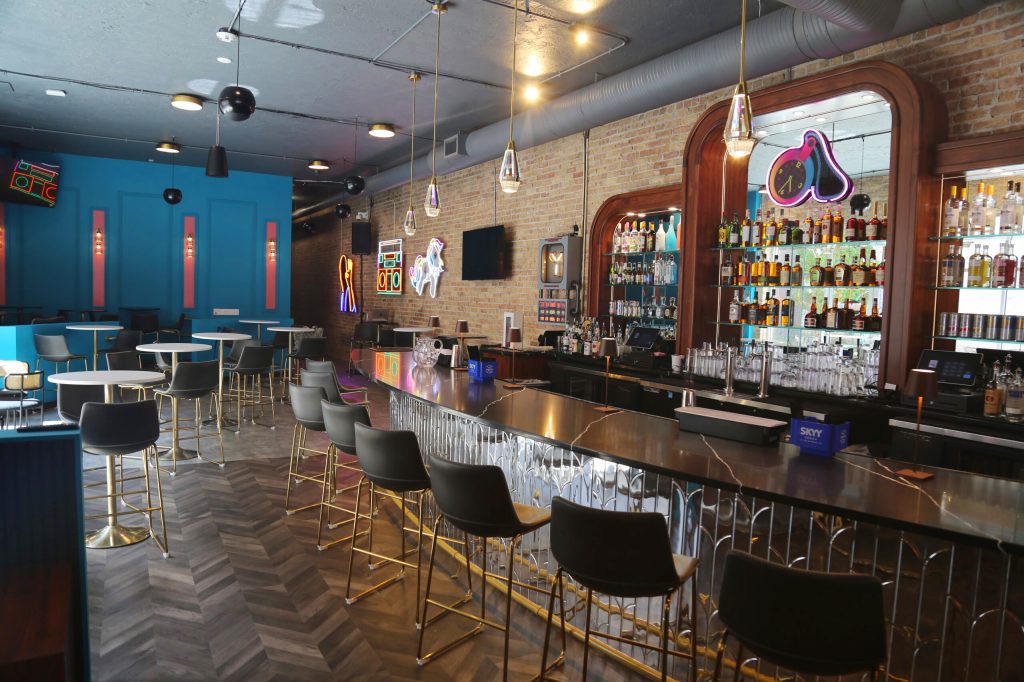
The Retailworks team recently collaborated with Summer of ’85, an 80s-themed bar and restaurant. If you experienced the 1980s, you know it was a totally rad time when creativity exploded in all genres from music to movies and beyond. Many of today’s mainstream pop culture trends were born in this fertile time. Plus, the clothes, interior design, and graphics were crazy colorful and just plain fun, which made this project uniquely interesting, challenging, and totally tubular.
Our work on this project revealed five critical strategies for a successful themed concept.
- Teamwork makes the dream work
A concept is only as strong as the team bringing it to life. A successful themed space results from clear collaboration between owners and experienced professionals. In our work with the owners of Summer of ‘85, they provided a clear vision for the space, with pre-selected pop culture references, and on-target color palettes and finishes.
Communicate your vision clearly to your design team and contractors, and trust their expertise to solve the technical challenges. The success of the project depends on everyone understanding not just what the goal is, but why it matters to you and your customers.
- What goes around comes around
Capitalize on trending nostalgia, especially nostalgia that sells and taps into current cultural trends. The 80s revival isn’t just about reminiscing as much as it represents optimism, creativity, and fun that today’s customers crave and sets Summer of ‘85 up for success.
When choosing a theme, consider how it connects with current cultural moments and whether it evokes positive emotions for your target audience. Is there enough cultural content to create an authentic, layered experience, and will it still feel relevant years from now?
- Let creative people go crazy
Themed spaces succeed when they fully commit to the concept. Avoid half-hearted themes, as they can create confusion and missed opportunities. The most memorable experiences come from spaces where no detail was too small to consider. Customers will notice those unexpected creative touches that show your commitment to the experience. So let your creative professionals push boundaries within your brand parameters. Our team loved the freedom Summer of ‘85’s owners gave them to be as creative as possible; this is the closest the team has come to designing Pee Wee’s Playhouse — no idea was too far out there. Creativity ruled!
- Consistent branding rocks
Consistency across all customer touchpoints transforms good spaces into destination experiences, even in retail. Your logo, interior design, staff dress, social media presence, and website should reinforce the same brand story. The Retailworks’ team developed a bold and fun logo for Summer of ‘85 and translated the colors, look, and feel of that logo into the physical space. Nowhere in the space do you forget you’re in Summer of ‘85.
When customers encounter consistent theming everywhere, they feel immersed in it. This deeper engagement leads to longer visits, higher per-customer spending, memorable experiences, and return visits.
- Lean into your theme
In Summer of ‘85, the team incorporated the theme into the decor elements within every space, even the restrooms. By layering on theme elements and focusing on details, customers will keep coming back to see something new. Try weaving your theme into the music you play, social media content, staff knowledge of theme-related trivia, and/or store sections that represent the concept.
Consider a theme for your next strategic design to create an experience your customers can’t stop talking about and won’t soon forget. The key lies in balancing authentic creative expression with strategic business thinking. When you commit fully to your concept while ensuring every design decision supports your profitability goals, you create the kind of destination that thrives.